
Alger County Arrest Records and Court Charges
An Alger County arrest record is a record of the arrest itself. It notes who was taken in, who made the arrest, and the booking that followed. Booking is the intake step at the jail, where a name, a date, and a basic charge are logged. That record lives on the law enforcement side. It is not the same as the formal court charge. Once a person is arrested, the case moves to the Alger County Prosecutor's Office. The prosecutor decides which charges to file and puts them before the court. Robert T. Steinhoff serves as the county prosecutor, and his office is the charging authority for criminal matters in the county.
Two records grow out of one event. The arrest record sits on the sheriff and booking side, and the jail roster is where custody detail shows up. For the jail roster and booking detail, the county inmate records give the better view. The charge record is different. It holds the court charges after arrest that the prosecutor actually filed, and it tracks each charge through the case. The full case file, with pleas, hearings, and the final outcome, sits with the Alger County criminal court records. Reading both together gives the clearest picture of what happened.
The county prosecutor also runs victim services beside its charging work. The prosecutor's crime victim information page outlines how the office keeps victims informed once charges are filed.
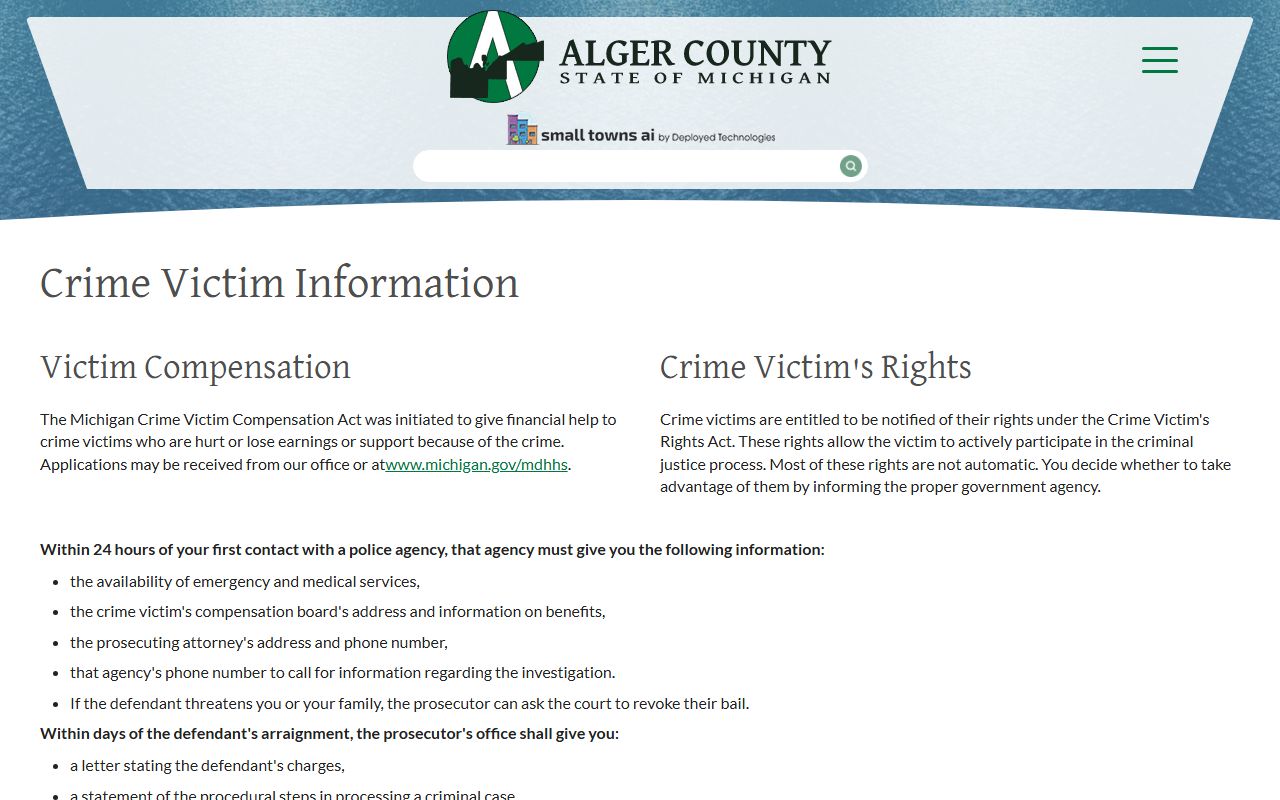
Victims who want notice of hearings are asked to keep a current address and phone on file with the office. Note: An arrest record and a court charge record are two different files, and one can exist without the other for the same event.
How to Find Alger County Arrest Records
The county does not run a single branded arrest-records portal. Charges and charge status show up through Michigan's statewide case search instead. The Michigan Courts case search can filter by lower court, including Alger Circuit Court and the District Court. Arrest and booking detail is a separate matter. That custody information lives with the sheriff and the jail, not with the court index.
- Open the Michigan Courts case search and choose the case option.
- Search by the defendant's name or by a case number.
- Open the case and read the list of charges that were filed.
- Check each charge for its code, its level, and its current status.
Statewide criminal history is a separate search. Michigan keeps that record at the state level, and it rolls up charges from courts across the state. For custody status, the jail and the state offender system are the right tools.
The Alger County Sheriff's Office page is the official contact point for the arrest and booking side of a case.
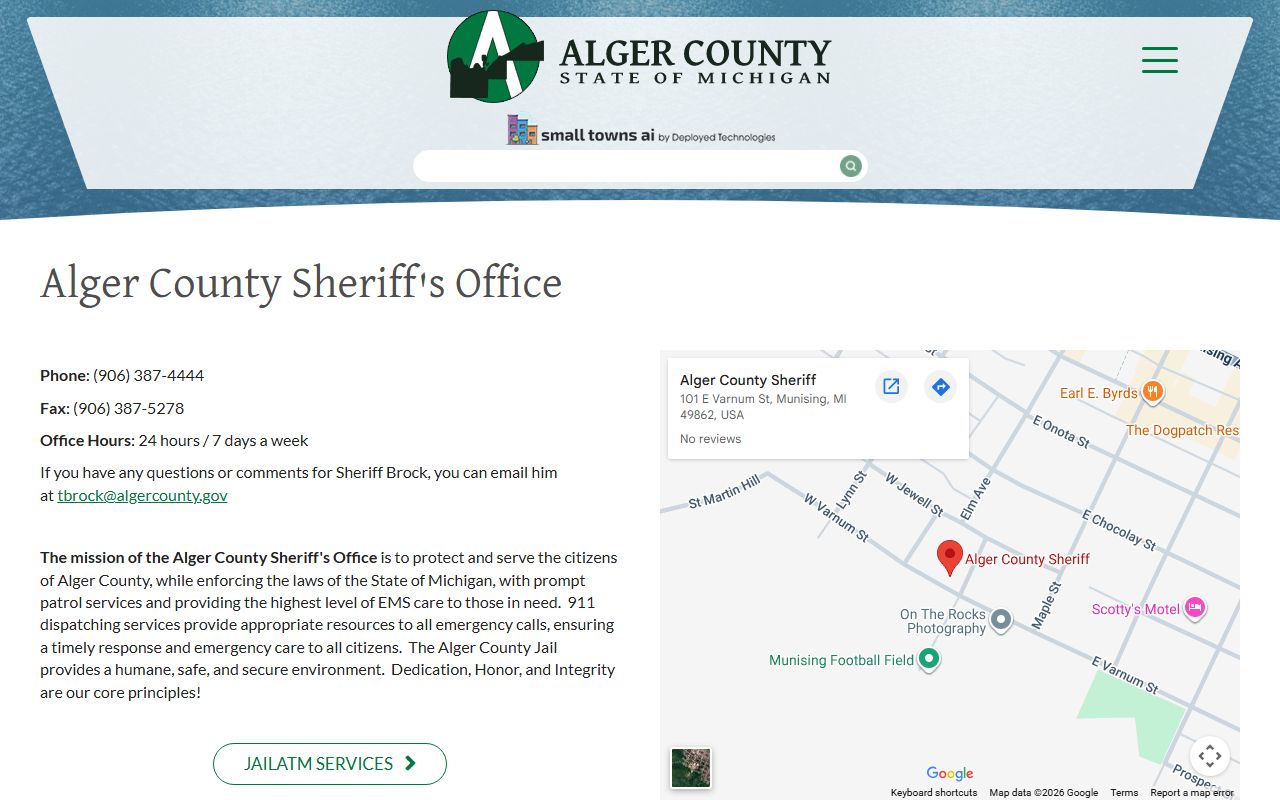
The sheriff's office runs the county jail and can confirm booking questions the court index will not show.
How Alger County Charges Get Filed
From arrest to court, the paperwork changes hands. The arrest and booking happen first. The charge record begins when the prosecutor files a charging document, which is the paper that names the crime and opens the case. In Alger County, a misdemeanor case can start from a police ticket, a citation, or an arrest warrant. An arrest warrant must be authorized by the prosecutor before it issues. Three main charging documents show up across Michigan courts.
| Complaint | Information | Indictment | |
|---|---|---|---|
| Filed By | Officer / Prosecutor | Prosecutor | Grand Jury |
| What It Is | Sworn accusation that opens a case | Formal charge after review | Charge voted by a grand jury |
| Common For | Misdemeanors | Many felonies | Serious felonies |
| Starts | The case | The case | The case |
Protective orders follow their own filing path but still run through the same prosecutor's office. The county's personal protection order instructions show how one specific type of court matter is filed and served.
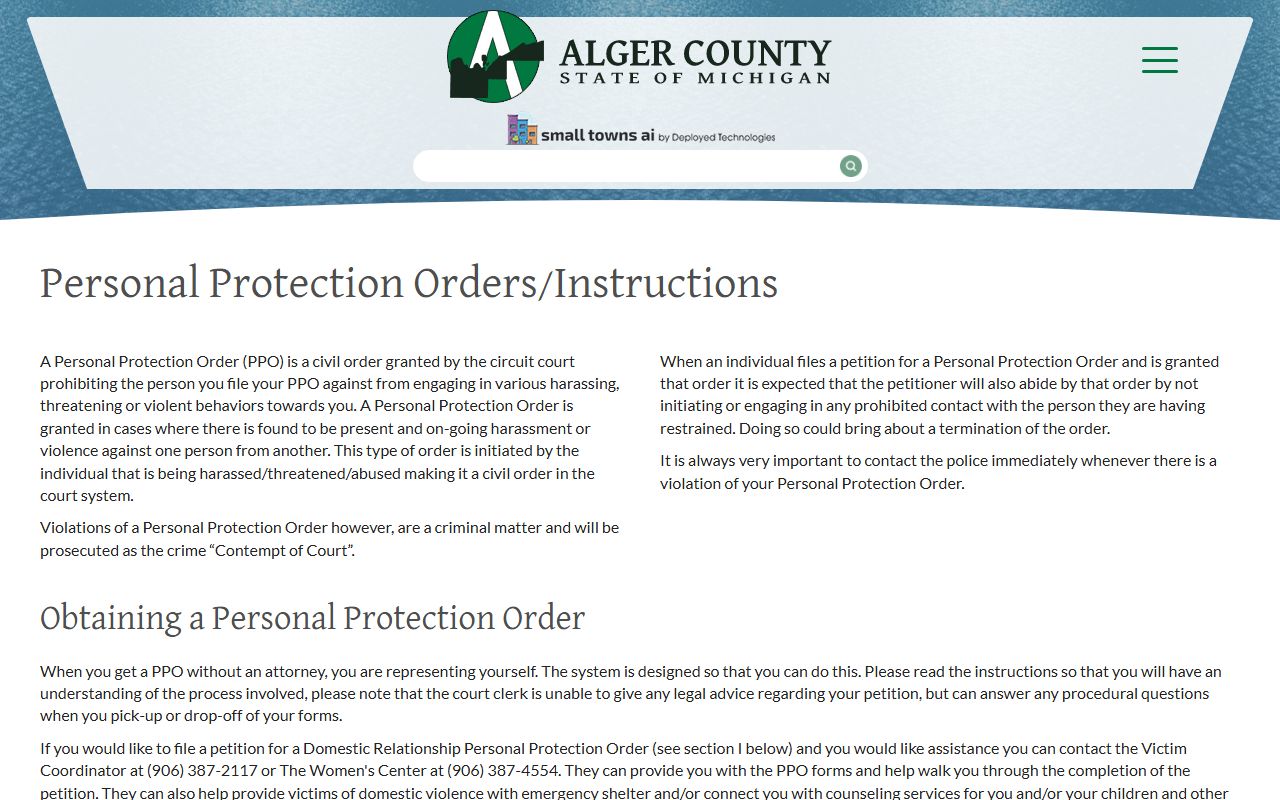
A protection order is civil, yet a violation of one can lead to a new criminal charge that joins the court record.
Alger County Charge Status Explained
Charges rarely stay frozen. As a case moves, a charge can be amended, reduced, added, dropped, or dismissed. The status field tells a reader where each count stands right now. Some terms sound alike but mean different things. Plain definitions help.
| Status | What It Means |
|---|---|
| Pending | The charge is filed and the case is still open. No final ruling has been entered. |
| Amended | The prosecutor changed the charge, such as fixing a code or swapping one count for another. |
| Reduced | A higher charge was lowered to a lesser one, often a felony down to a misdemeanor. |
| Dropped | The prosecutor chose not to pursue the charge, so it no longer moves forward. |
| Dismissed | The court threw out the charge, by request or by ruling. It may or may not be refiled. |
| Nolle Prosequi | A Latin term meaning the prosecutor will not pursue the charge at this time. |
Status matters for reading a record. A dropped count may sit right next to a count that still stands. The final result is not clear until the whole case closes. Note: A dismissed or dropped charge can still appear in the court file, even though the prosecutor is no longer pursuing it.
Charges vs. Convictions
Being charged is not the same as being found guilty. A charge is an accusation, nothing more. It says the prosecutor believes there is enough reason to bring the case. A conviction is different. It is a proven or pleaded outcome, entered after a plea or a verdict. Until that point, the person is presumed innocent.
| Charge | Conviction | |
|---|---|---|
| Stage | Accusation | Verdict or plea |
| Burden of Proof | Probable cause | Beyond reasonable doubt |
| Public Record | Yes | Yes |
Both a charge and a conviction can show in a court file. The key is to read which one a record reports. A long charge list does not prove guilt on any single count.
Sealed vs. Expunged Records
Some records leave public view. Michigan lets certain criminal records be set aside under state law. A set-aside, often called an expungement, treats the record as though the case no longer counts against the person for most purposes. Sealing and expungement are close but not identical.
| Sealed | Expunged | |
|---|---|---|
| Visibility | Hidden from public | Set aside and removed from public view |
| Law Enforcement | Limited access | Very limited access |
| Eligibility | By court order or rule, such as juvenile or diversion files | Under MCL 780.621, after the waiting period for qualifying convictions |
People often use the word expunge loosely. In Michigan the correct term is set aside, and the sentencing court controls the process. A clerk can explain the filing path but cannot give legal advice.
Alger County Charge Codes and Levels
Each charge points to a specific law. Michigan assigns a code to the statute the charge is built on. That code sets the crime and the possible penalty. Charges fall into three broad levels, and one arrest can produce several separate charges, each with its own code and level. In the county's district court, a misdemeanor carries up to one year in jail.
Michigan sorts most charges into these levels:
- Felony: a serious crime that can bring more than one year in prison.
- Misdemeanor: a lesser crime, up to one year in the county jail.
- Civil infraction: a non-criminal violation, such as many traffic tickets.
The level drives where a case is heard. Felonies move up to the circuit court after a step called bindover. Misdemeanors and infractions usually stay in the district court from start to finish.
Statewide Alger County Charge History Lookups
Local charges roll up into bigger systems. Michigan's statewide case search covers trial and appellate courts and can filter to Alger County courts. For serious cases that move to federal court, a different system applies. Federal charges are tracked through PACER, the official access tool for federal case files. A free alternative, CourtListener, holds many federal opinions and dockets, though it is not the official docket.
PACER is the federal judiciary's public access service for case and docket information.
Alger County sits in the Western District of Michigan, so a federal charge from the county would appear there rather than in the state system.
Background Check Considerations
A casual name search is not a background check. A real background check follows the Fair Credit Reporting Act, a federal law that governs reports used for jobs, housing, or credit. Those checks come from regulated agencies with strict rules. A quick online lookup does not carry the same weight and should not be used for those decisions.
CourtListener offers free access to many court opinions and dockets for research.
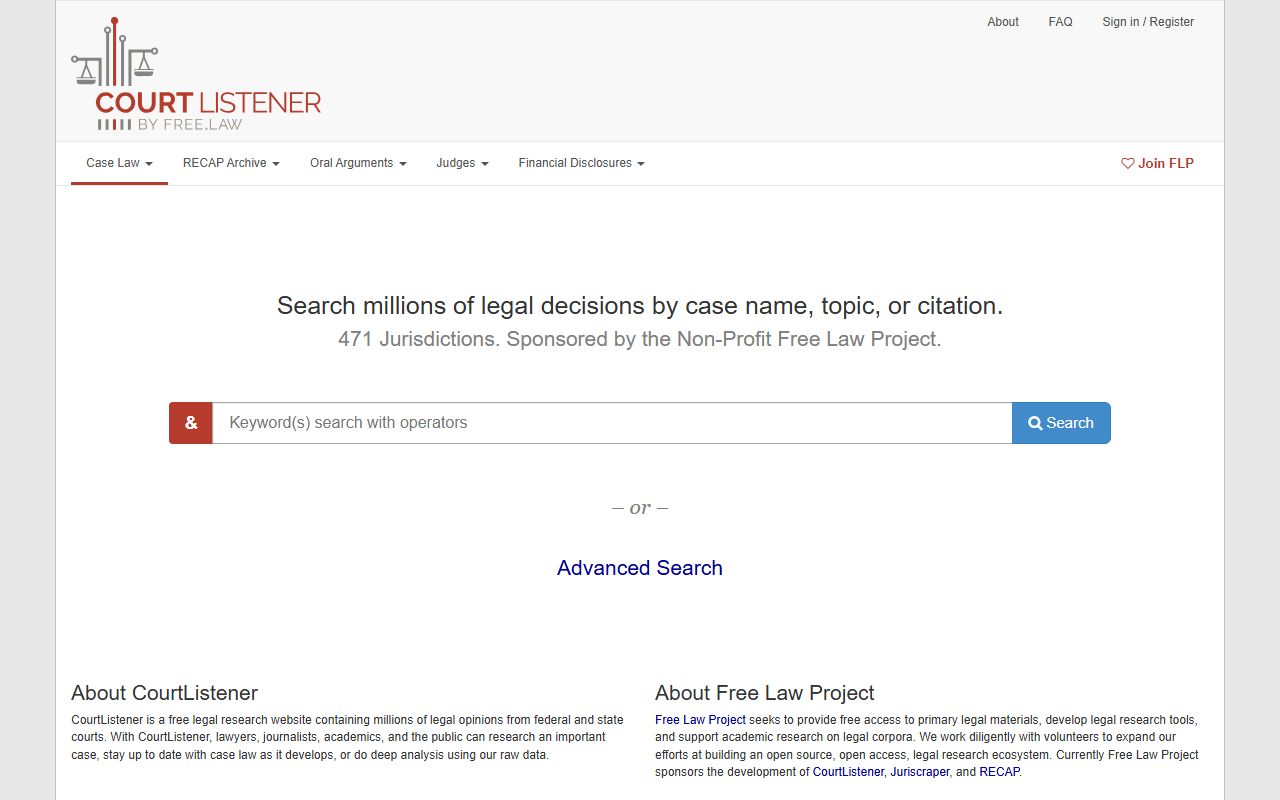
Tools like that help with research, but they are not consumer reports and cannot replace a proper background check.
Important: This resource is not a consumer reporting agency under the Fair Credit Reporting Act, and its data cannot be used for employment, credit, housing, or insurance screening.
Restricted Charge Records in Alger County
Not every charge is open to the public. Michigan court records are public unless a law or court order restricts them. Court records fall under court rule MCR 8.119, not the state FOIA law. Juvenile charges are the clearest restricted class. Sealed and expunged charges also drop from the public view. A charge tied to an open investigation may be withheld until the case is ready.
Access is the rule, restriction the exception. When a file is public, the county or court can explain how to inspect it or request a copy. When a charge is juvenile, sealed, or expunged, the office may lawfully withhold it or show only a redacted version. For older files that are not online, a request to the county office that holds the record is the usual fallback. Note: Michigan treats court records as public under court rule rather than under the state Freedom of Information Act, which covers other government records.