
Where Alger County Warrants Are Held
Alger County does not publish an active warrant list. No county page shows open warrants by name. That is the first thing to know before you start.
Warrants here are shared between law enforcement and the courts. A warrant must be authorized by the county prosecutor before it is issued. The Alger County Sheriff and local police then carry it out. The 93rd District Court and the 11th Judicial Circuit Court hold the case files that a warrant belongs to. Because there is no single online tool, a real warrant check runs through those offices one at a time.
This split matters for the public. A person worried about an old ticket may face a bench warrant from the district court. A person tied to a criminal case may face an arrest warrant approved by the prosecutor. The office you call depends on which kind of warrant you expect. When you are unsure, the sheriff is a safe first contact.
Types of Alger County Warrants
Warrants come in a few forms. Each has its own trigger and its own path to clearing it. The two most common in Alger County are the arrest warrant and the bench warrant.
- Arrest warrant - issued when the prosecutor approves a charge and a court finds probable cause to take a person into custody.
- Bench warrant - issued by a judge when someone misses a court date or ignores a citation, such as an unpaid traffic ticket.
- Search warrant - signed by a judge to let officers search a place or seize property, not to arrest a person.
- Capias or failure-to-appear warrant - a court order to bring in a person who did not show up as required.
Traffic cases are a frequent source of bench warrants. If a citation is not handled, the district court can enter a judgment, add costs, and suspend the driver license. A failure to appear can lead the court to issue a bench warrant on top of that. Small problems grow when they are ignored.
How to Check for an Alger County Warrant
With no public database, a warrant check is a series of calls and visits. Start with the office most likely to hold your record, then work down the list. Have a full name and date of birth ready before you begin.
- Call the Alger County Sheriff's Office at (906) 387-4444 and ask how to confirm whether a warrant is on file.
- Contact the 93rd District Court at (906) 387-3879 for bench warrants tied to traffic tickets, misdemeanors, or missed hearings.
- Reach the Alger County Prosecutor's Office at (906) 387-2117 for questions about a charge that led to an arrest warrant.
- Visit the courthouse at 101 Court Street in Munising in person if a phone call does not resolve it.
- File a written public records request when you need a copy of a document the office can release.
Speaking with a lawyer before you act is wise when a warrant is likely. An attorney can confirm the warrant, explain the charge, and arrange a surrender or bond in a way that protects your rights.
Requesting Alger County Warrant Records
Some warrant-related documents can be released through Michigan's Freedom of Information Act. County records that are public fall under this process, though court case files follow court rules instead. The county lays out its request steps and forms on its FOIA page. Requests can be mailed, emailed, faxed, or dropped off at the courthouse.
The county's FOIA materials give the full request process, the fee worksheet, and the forms packet in one place. Reviewing the Alger County FOIA page before you write your request helps you name the record and pick a delivery method.
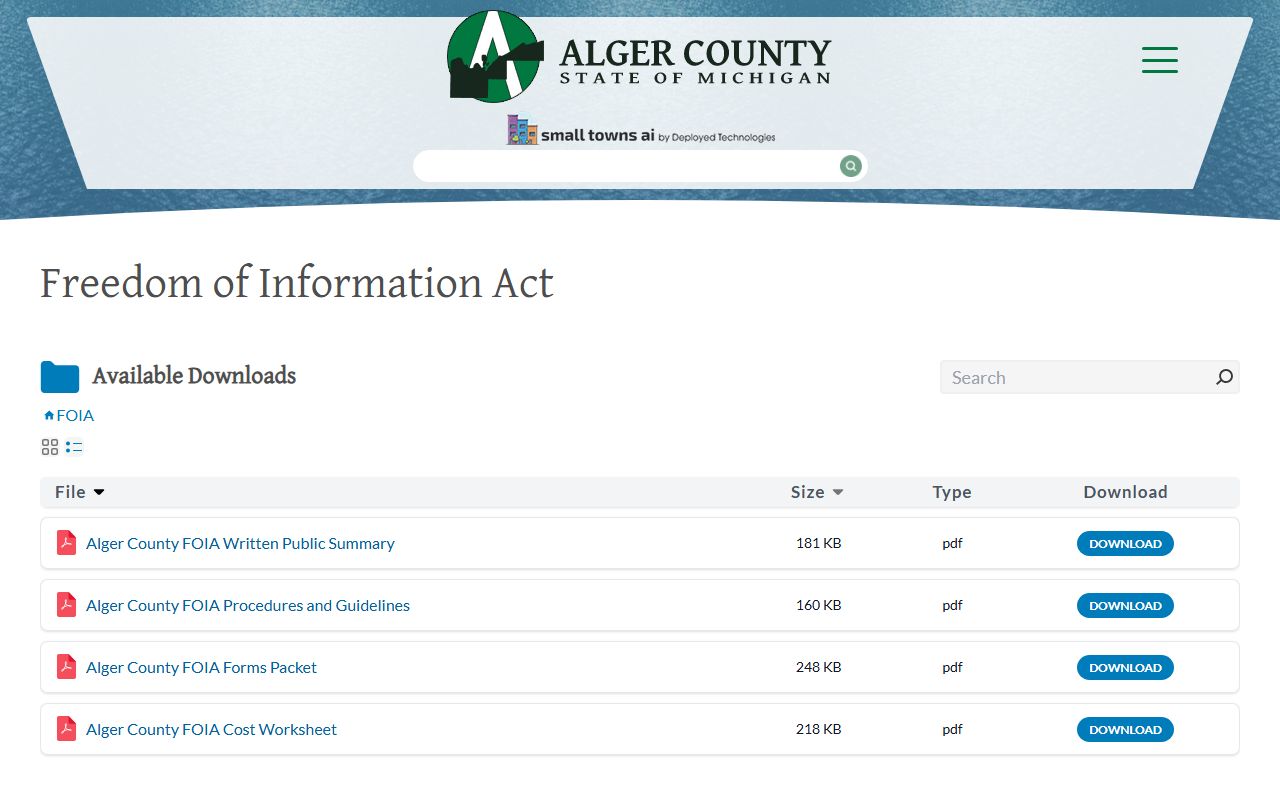
The request form asks for a clear record description and your contact details, so the office can match the file and respond. The table below lists the fields the county's FOIA forms packet uses.
| Field | What to Provide |
|---|---|
| Request Type | Copy, certified copy, record inspection, or subscription to a record issued on a regular basis |
| Delivery Method | Pick up, view your own copies onsite, mail, email, or county digital media |
| Record Description | A plain description of the record you want, as specific as possible |
| Requestor Name | Your full name and firm or organization, if any |
| Mailing Address | Street, city, state, and ZIP code |
| Contact | Phone, fax, and email |
| Extension Consent | Optional consent to a non-statutory extended response date |
Note: A public records request may return a copy with exempt material removed rather than a full unredacted file.
Alger County Warrant Contacts
Two offices handle most warrant questions in the county. The sheriff runs enforcement and the county jail. The district court handles bench warrants and the cases behind them. Keep both numbers close when you are tracking a warrant.
Alger County Sheriff's Office
101 E. Varnum Street
Munising, MI 49862
(906) 387-4444
Open 24 hours a day, 7 days a week
93rd District Court
101 Court Street
Munising, MI 49862
(906) 387-3879
Monday to Friday, 8:00 a.m. to 4:00 p.m.
What an Alger County Warrant Record Shows
A warrant is a court order with a set of standard details. When an office confirms one, the record usually carries the fields below. Knowing them helps you ask the right questions on the phone.
| Field | What It Shows |
|---|---|
| Named Person | The individual the warrant is issued against |
| Warrant Type | Arrest, bench, search, or capias |
| Issue Date | When the court signed the order |
| Charge or Cause | The offense or the missed obligation behind it |
| Issuing Court | The 93rd District Court or the 11th Judicial Circuit Court |
| Bond or Bail | Any amount set for release, when listed |
Bond terms decide how a person can be released after an arrest. The district court sets bail on many felony and misdemeanor cases, and it handles first appearances. A bond figure on a warrant tells you what release may cost.
What to Do If You Have an Alger County Warrant
An open warrant does not go away on its own. It can lead to arrest during a routine stop. Handling it early gives you more control over the outcome.
Confirm the warrant first, then plan a response. A defense attorney can check the charge, contact the court or prosecutor, and set up a surrender or a bond hearing. For a traffic bench warrant, paying or contesting the underlying ticket and appearing in court can clear the matter. Michigan reports unresolved traffic cases to the Secretary of State, so a license can be suspended until the case is closed. The full charge and outcome live in the Alger County criminal court records for the case.
Important: Talk with a licensed attorney before you turn yourself in, so you understand the charge, the bond, and your options first.
Common Alger County Warrant Questions
A few questions come up again and again when people try to run an Alger County warrant search. The short answers below reflect how the county actually handles warrants.
Does Alger County post a warrant list online? No. The county does not publish an active warrant list on its website. To confirm a warrant, you contact the sheriff, the district court, or the prosecutor by phone or in person. Have a full name and date of birth ready before you call.
Who approves a warrant in Alger County? The county prosecutor. A warrant must be authorized by the prosecutor before it is issued. Law enforcement then carries it out, and the court holds the case file that the warrant belongs to.
Can a traffic ticket turn into a warrant? Yes. If a citation is ignored, the district court can enter a judgment and suspend the license. A failure to appear can lead the judge to issue a bench warrant. Paying or contesting the ticket and appearing in court clears the matter.
Restricted Alger County Warrant Records
Not every warrant is open to the public. Some are sealed to protect an active case. A sealed warrant may not be confirmed until officers act on it.
Juvenile matters are handled through the Probate and Family Court and are usually confidential. Those records are not shown the way adult cases are. Federal warrants sit outside the county system entirely and route through the U.S. District Court for the Western District of Michigan, not the county sheriff or the district court. Search warrants tied to an open investigation are often held back until charges are filed.
When an office declines to share a warrant, a records exemption or an active case is usually the reason. A person who believes a warrant is wrong should work through the issuing court or an attorney rather than the search desk. The court that signed the order is the office that can recall, quash, or correct it. A clerk can explain the local filing path, but staff cannot give legal advice.