
What Alger County Probate Records Cover
The Alger County Probate Court handles a defined set of legal matters. It appoints guardians and conservators for minors, for incapacitated adults, and for developmentally disabled individuals. It files wills and trusts for safekeeping. It commits mentally ill individuals under a court order. It also settles the estates of people who have died. Those duties make the probate court the county's hub for wills, estates, and the care of people who cannot manage their own affairs. A probate file can follow one person for years, so the record often holds many steps.
Probate work here does not stop at wills. The same court runs a family division and a juvenile division. That is why a name change or an adoption can route to probate rather than to another local court.
The county lays out these duties on its Alger County Probate Court page.
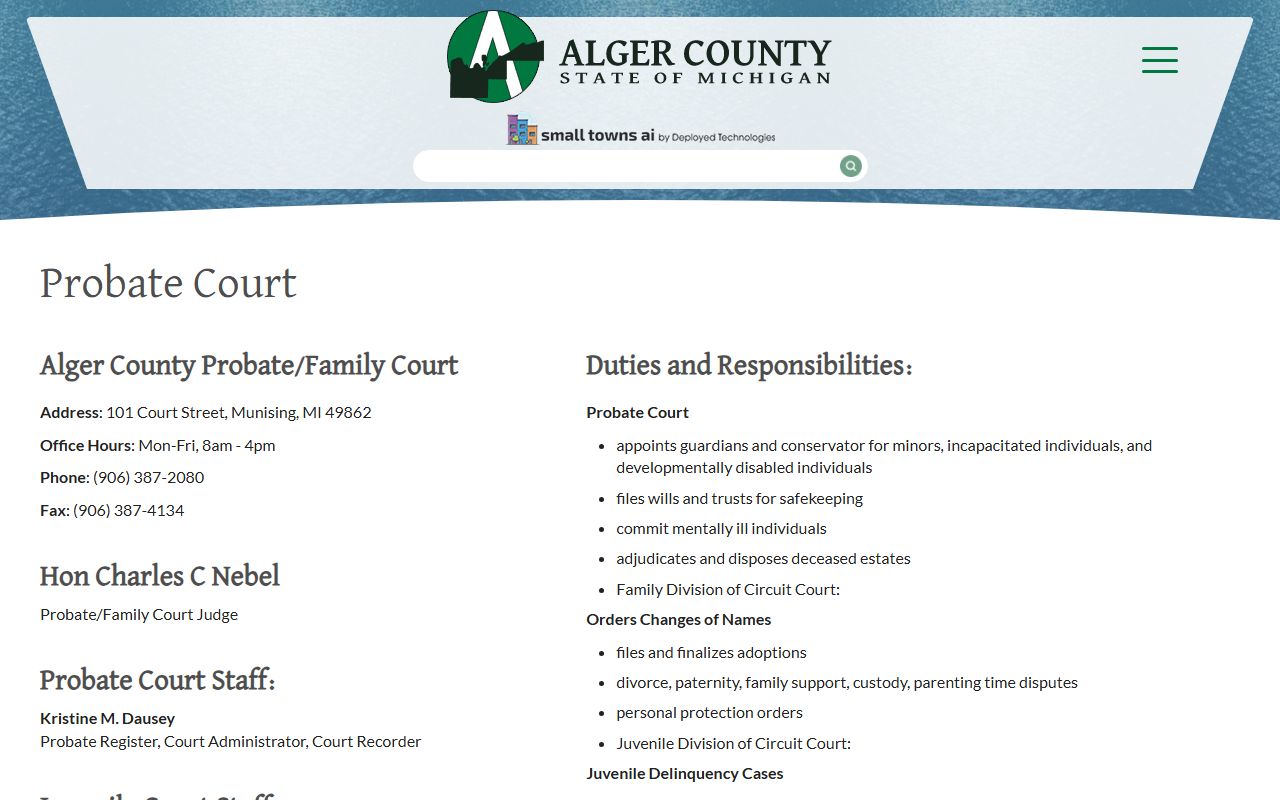
That page confirms the court both holds wills for safekeeping and decides who serves an estate. That single fact sets the frame for nearly every record the court keeps.
Divisions of the Alger County Probate Court
The court splits its work into clear divisions. Each one holds a different kind of record, and knowing the split saves time. Estate and guardianship files sit on the probate side. Divorce, custody, and protection files sit on the family side. Youth cases sit on the juvenile side. The table below sorts the main functions the county lists for each part of the court.
| Division | What It Handles |
|---|---|
| Estates and Probate | Wills and trusts filed for safekeeping, and the estates of people who have died. |
| Guardianship and Conservatorship | Guardians and conservators for minors, incapacitated adults, and developmentally disabled individuals, plus mental-health commitments. |
| Family | Name changes, adoptions, divorce, paternity, family support, custody, parenting-time disputes, and personal protection orders. |
| Juvenile | Delinquency, neglect and abuse, juvenile traffic, foster care, youth diversion, in-home care, detention support services, and community service. |
Each division keeps its own files and follows its own access rules. A reader who knows the right division can ask the court office a sharper question. Note: A single family event can touch more than one division, so a name change and a guardianship for the same person may sit in separate probate files.
Probate Terms Defined
Probate uses words that rarely come up in daily life. A short glossary helps a first-time reader make sense of a file. The terms below show up across wills, estate filings, and guardianship papers in Alger County.
- Testator
- The person who made the will. Their wishes guide how the estate is shared once the court accepts the will.
- Executor
- The person named in the will to carry it out. The court gives the executor authority to gather assets and pay debts.
- Administrator
- The person the court names to settle an estate when there is no will, or when no executor can serve.
- Intestate
- Dying without a valid will. State law then decides who inherits and in what shares.
- Petitioner
- The person who asks the court to open a case, such as an estate, a guardianship, or a name change.
- Guardianship
- A court order that lets one person make personal or care decisions for a minor or an adult who cannot decide for themselves.
- Conservatorship
- A court order that puts one person in charge of another person's money and property when that person cannot manage it.
How to Access Alger County Probate Records
No public probate search portal exists for Alger County. Access runs through the court office, and the court decides what the public may see. Court records stay open unless a rule or order restricts them, so many routine estate files can be viewed on request. The steps below outline a practical path to a file.
- Gather the basics first: the full name of the person, an approximate date, and the type of matter, such as an estate, a guardianship, or a will on deposit.
- Contact the Alger County Probate and Family Court office by phone or in person at the courthouse in Munising during posted hours.
- Ask staff to confirm the case exists and whether the file is public or restricted.
- Request to inspect the file at the counter or to order copies under the court's rules.
Public court records stay available unless a statute, rule, or order limits them under Michigan court rule MCR 8.119, which is separate from the state's Freedom of Information Act. The state's trial court records management standards explain that court files are not FOIA records and that public web views are limited. Note: Court staff in Alger County can confirm whether a probate file is public and explain how to request copies, but they cannot offer legal advice.
Alger County Probate and Family Court Office
The Alger County Probate and Family Court works out of the county courthouse in Munising. One judge leads the court, and a small staff handles filings, hearings, and record requests. Hon. Charles C. Nebel serves as judge. Kristine M. Dausey is the probate register, court administrator, and court recorder. Jamie Nebel serves as juvenile officer and court administrator, and Heather Perron is the diversion officer.
Alger County Probate and Family Court
101 Court Street
Munising, MI 49862
(906) 387-2080
Fax: (906) 387-4134
Monday to Friday, 8:00 a.m. to 4:00 p.m.
The court shares the same building shown in the county's own courthouse photo.

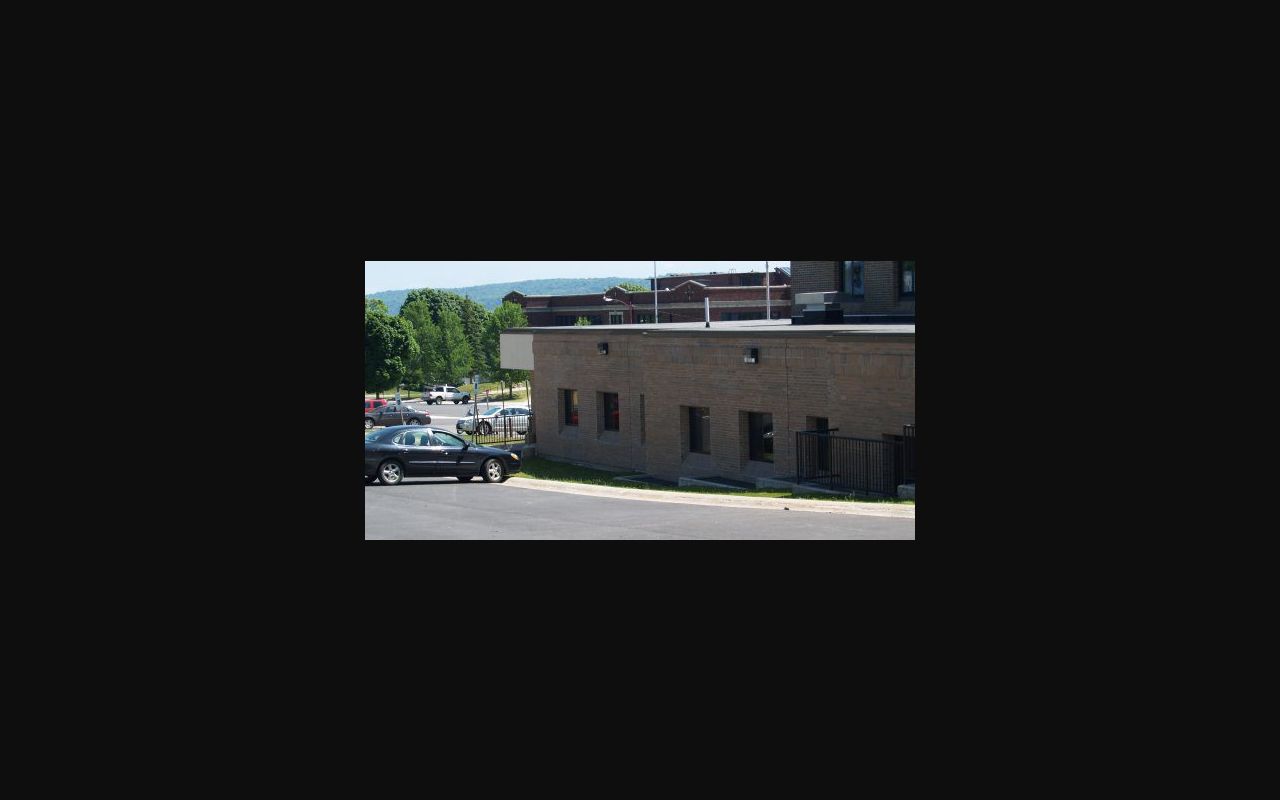
Because the probate court and the courthouse share one address, a records visit and a hearing use the same door. Wills can also be deposited here for safekeeping while the maker is still living.
What Alger County Probate Records Show
A probate file grows as a case moves. It usually opens with a petition or an application, then adds orders, notices, and reports. An estate file can hold the will, an inventory of assets, accountings, and the record of the final distribution. A guardianship file can hold the petition, the order that names a guardian, and later status reports on the person's care.
Common items in an Alger County probate file include:
- The petition or application that opened the case
- A will or trust filed for safekeeping
- Letters that name an executor, administrator, or guardian
- Inventories and accountings of estate assets
- Court orders and hearing notices
- The final order that closes the estate
An estate case tends to show the most detail, since it tracks money, property, and heirs over time. A guardianship or conservatorship file leans more on care reports and orders. A will held for safekeeping may sit quietly for years before any case opens. The record type shapes how much a reader will find.
A death often starts both a probate case and a request for a certified death record, which the county keeps through the Clerk / Register of Deeds. The two records serve different needs, so many families end up asking for both.
Where Alger County Probate Appeals Go
Probate matters are state court matters, not federal ones. An estate, a guardianship, or a will contest starts and usually ends inside the state trial court. If a party disagrees with a ruling, the appeal climbs the state court ladder rather than crossing into the federal system.
The Michigan Supreme Court sits at the top of that state ladder above the Court of Appeals and the trial courts.
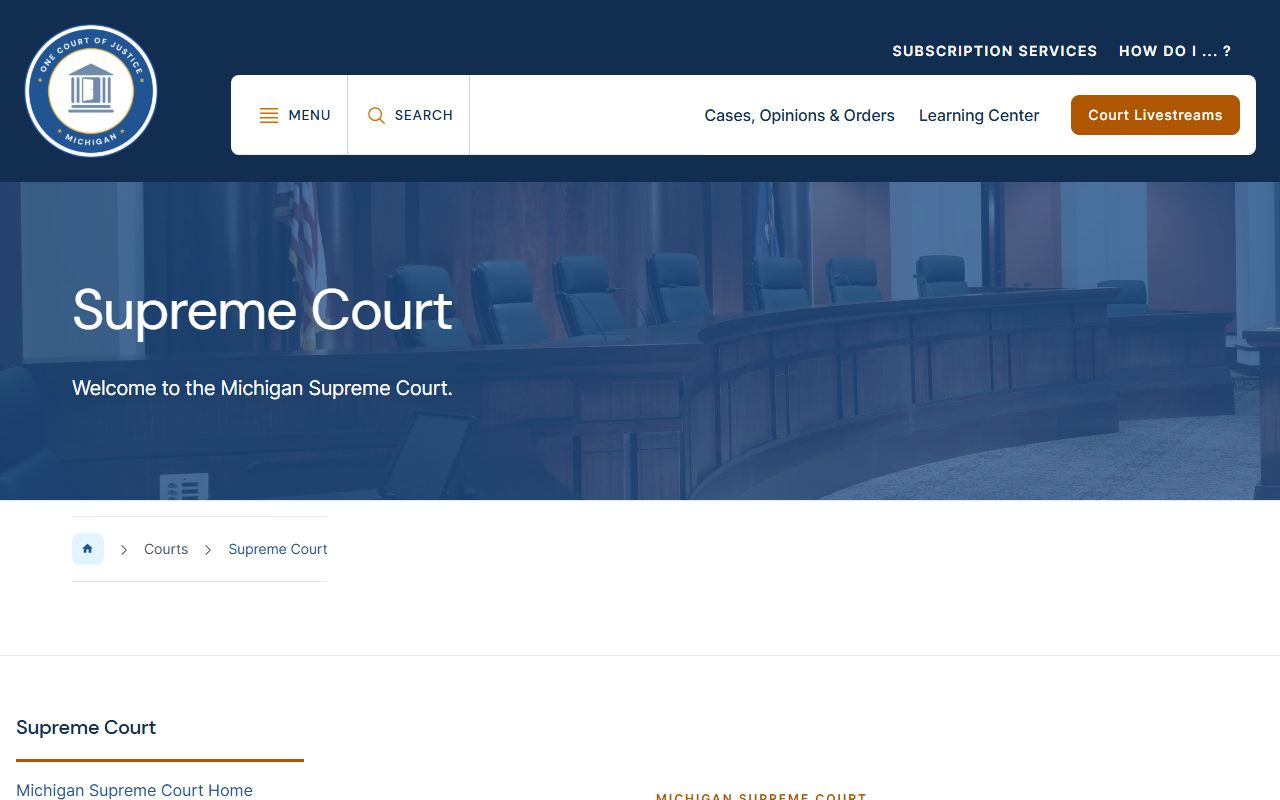
That state path is the one nearly every Alger County estate follows. Federal courts rarely touch probate. Still, the U.S. Sixth Circuit Court of Appeals sits above the federal trial courts in this region for the narrow matters that do reach federal court.
The U.S. Sixth Circuit Court of Appeals covers Michigan for those uncommon federal appeals.
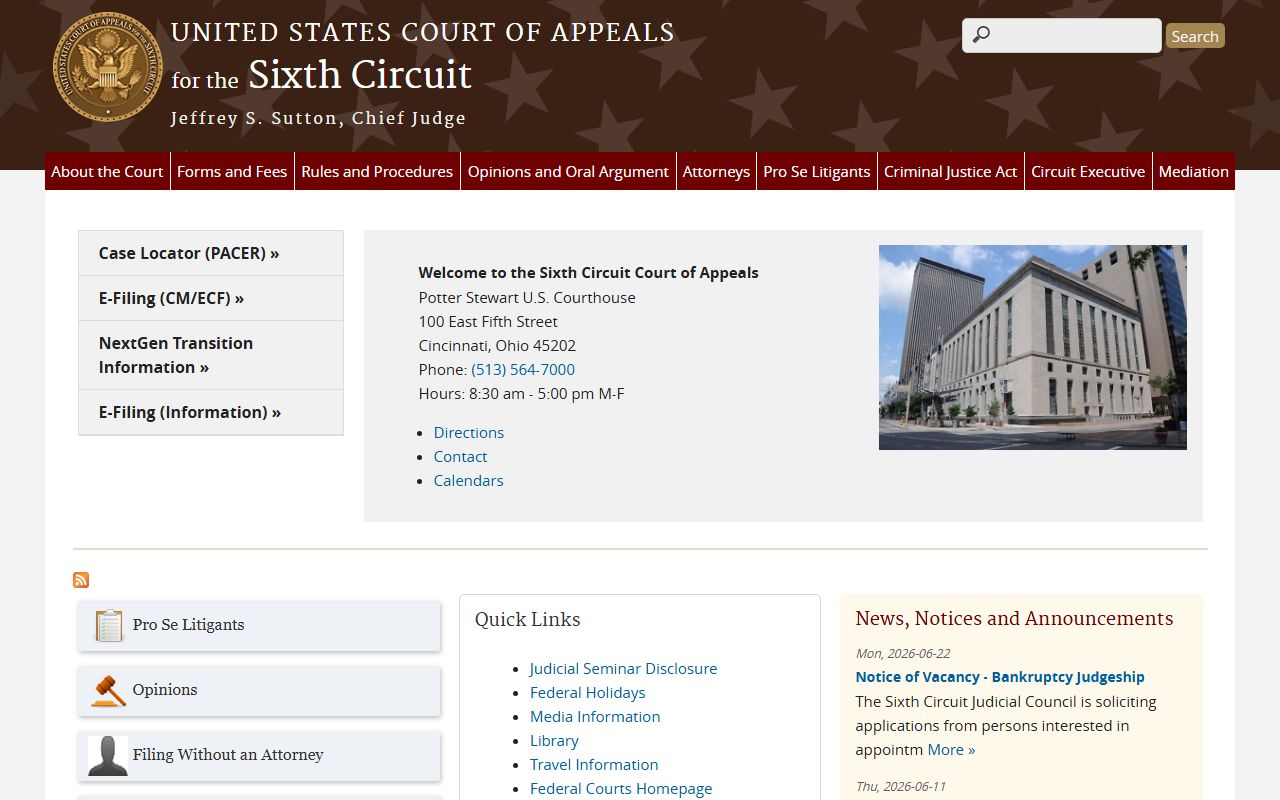
For a routine estate or guardianship, that federal path almost never applies. Note: Because probate is a state matter, the federal courts listed here rarely handle an ordinary Alger County estate, guardianship, or will dispute.
Restricted Alger County Probate Records
Not every probate record is open. Some categories stay confidential by law, even when the case clearly exists. Adoption files are the clearest example. Juvenile records and mental-health commitment records are also closely guarded. The existence of a proceeding does not mean the full file is public.
For these files, the court may release only a redacted view or nothing at all. A judge's order can open a sealed file, but that is a separate legal step. Personal identifiers, such as birth dates or account numbers, are often removed from public copies even when the case itself is open.
Routine estate files usually stay open for inspection through the court office, while records tied to minors, adoptions, and mental health carry the tightest limits. When a clerk cannot show a case, restriction is often the reason. For the full range of case files and search tools across the county's courts, the court records overview points to the state case tools and the office fallback.