
Alger County Inmate Records at a Glance
The Alger County Sheriff's Office runs the county jail in Munising. It books people who are arrested in the county. It holds them before trial, during short sentences, and while they wait to move to another agency. The office is staffed around the clock. That means a live person can answer custody questions at any hour.
No public jail roster or online inmate lookup was found on the county website. This is the key point to grasp before a search. A person held in the local jail may not appear in any web tool at all. To confirm that someone is in the Alger County jail, the fastest path is a phone call to the sheriff's office or the jail administrator. Staff can verify a name, a booking, and often a bond figure over the phone.
State custody is a different story. Once a person is sentenced to prison, placed on parole, or put on probation with the state, their record moves into a statewide system that anyone can search for free. The split between local jail and state custody drives every other choice on this topic.
Three groups sit behind almost every inmate question in the county:
- County jail detainees, who may not show up in any public online tool.
- State prisoners, parolees, and probationers, who appear in the state offender system.
- Juveniles and restricted detainees, who usually are not public at all.
Important: There is no public Alger County online jail roster. Do not trust a third-party site that claims to show a live county inmate list. Confirm any local custody status with the sheriff's office or jail before you act on it.
Alger County Sheriff and Jail Contacts
Because there is no online roster, the sheriff's office is the front door for local custody questions. The office and the jail share the same building on Varnum Street. A general call reaches the front desk. A call to the jail administrator reaches the person who handles booking, bond, and day-to-day jail operations. Both contacts are worth keeping close.
The sheriff is Todd Brock, the elected head of the office. The jail administrator is Marc Maxon, who oversees intake and inmate housing. The two contact blocks below cover the general office line and the direct jail line.
Alger County Sheriff's Office
101 E. Varnum Street
Munising, MI 49862
(906) 387-4444
Fax: (906) 387-5278
Open 24 hours a day, 7 days a week
Alger County Jail Administration
Jail Administrator: Marc Maxon
Munising, MI 49862
(906) 387-7077
Email: mmaxon@algercounty.gov
Booking, bond, and jail operations
The full office is described on the Alger County Sheriff's Office page. Sheriff Brock can be reached by email at tbrock@algercounty.gov for broader questions. The same office fields active warrant questions and general custody calls at any hour.
Note: Call the jail line before you drive to Munising, since custody status can change fast and the office does not publish a live roster to check first.
Booking Into the Alger County Jail
Booking is the intake process that turns an arrest into a jail record. When a deputy or a city officer brings a person to the jail, staff record who they are and why they are held. The steps are routine. They also explain why a name may not be searchable for a while after an arrest.
During intake, staff take basic identity details, the arrest charge, and the arresting agency. They log personal property. They may take a photo and fingerprints. New arrivals go through a health and safety screening before they are assigned a housing spot. Classification sorts detainees by risk and by the type of charge, which decides where in the jail a person stays.
Bond often follows quickly. For many misdemeanor and traffic matters, a bond amount may be set at the jail under a schedule. For felony charges and more serious cases, a judge sets or reviews bond at a first court appearance. The charges that a prosecutor files after booking are tracked as Alger County arrest records and court charges, which is a separate record from the jail intake sheet.
How long a person stays in the county jail varies. Some post bond and leave within hours. Others wait for a hearing, serve a short sentence, or hold for transfer to state prison or another county. Booking, bond, and release timing are exactly the kind of details the jail can confirm by phone.
Sending Money to Alger County Inmates
Money is one of the few inmate services with a clear online path in the county. The sheriff's office links a vendor for deposits into inmate accounts. That vendor is JailATM, a common jail deposit platform. It handles funds, not roster search, so it will not tell you whether a person is in custody.
The JailATM deposit portal is where friends and family add money to an inmate account.
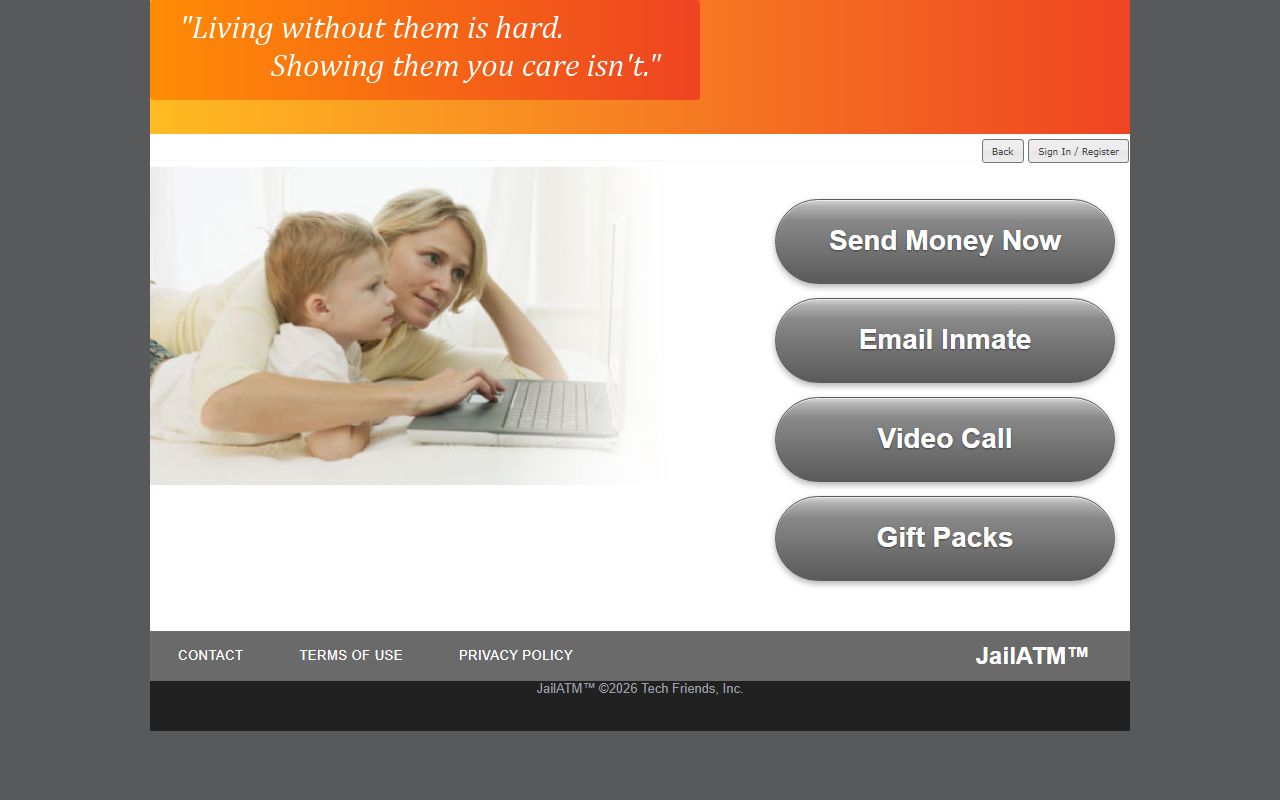
The deposit screen asks for the facility and the person you want to fund, which is why you need the inmate's correct name and booking details first. A few practical points keep a deposit from bouncing back:
- Confirm the inmate's full legal name and booking number with the jail.
- Check the approved deposit methods before you send funds.
- Ask the jail about any limit on how much an account can hold.
The county does not publish a commissary price list or a full deposit-fee schedule on the pages reviewed. Rates and limits should be confirmed with the sheriff's office. The safe rule is simple. Verify the account details before you pay, not after.
Note: Money deposits appear to go through JailATM, but the county does not publish commissary rates, so confirm current fees and limits with the jail before sending funds.
Searching State Custody Through OTIS
When a county inmate leaves local custody for state prison or state supervision, the statewide tool takes over. The Michigan Department of Corrections runs the Offender Tracking Information System, known as OTIS. It is free, public, and open to anyone with a web browser. For most people who search past the county jail, OTIS is the answer.
OTIS covers sentenced state prisoners, parolees, probationers, and people who have absconded from supervision. It is not a county jail roster. A person sitting in the Munising jail before trial will usually not be in OTIS, because they are not yet in state custody. That gap trips up a lot of searchers, so it helps to know the line up front.
The system's ground rules are spelled out on its own overview page. The OTIS About page explains what the tool is and how its data are sourced.
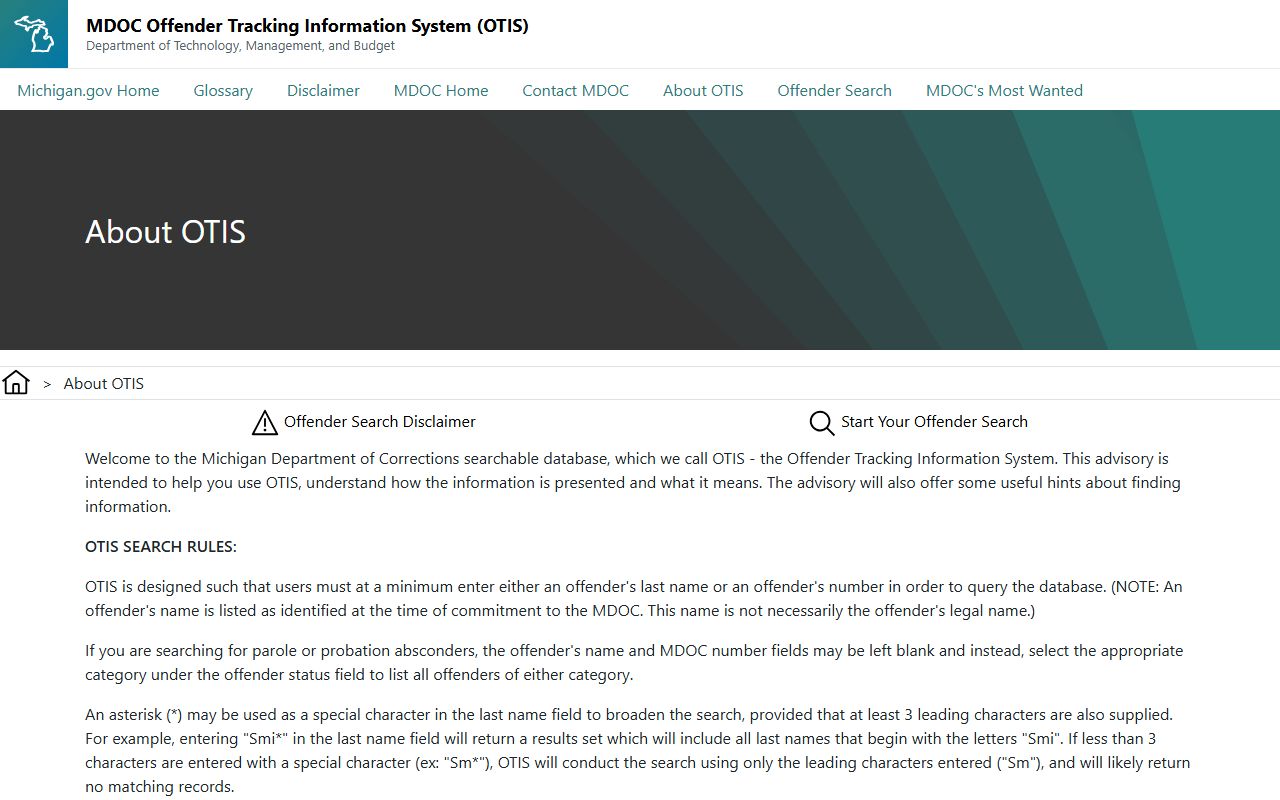
That page makes two things plain. OTIS is not a substitute for a formal criminal history check, employment verification, or proof of identity. Its data come from court records and corrections records, so questions about accuracy go back to the sentencing court, not to the website. Knowing the source of the data helps a reader judge what a result really means.
Search for an Alger County Offender
OTIS is built to search by name or by number, and the steps are short. A last name alone can return a result. A unique offender number narrows it fast. The walkthrough below moves from the search page to a full profile.
- Open the OTIS offender search page in any browser.
- Type a last name, or enter the offender number if you have it.
- Add a first name, sex, race, or age to narrow a common name.
- Press Search to pull the list of matching offenders.
- Click a name to open the full profile with status and sentence details.
If a search returns too many people, add one more detail and run it again. Age matching allows a window of a few years, so a birth-year guess still works. If nothing comes back, the person may be in a county jail, a federal facility, or already removed from the system.
OTIS Inmate Search Fields
The OTIS search form accepts several inputs, but only two of them can stand alone. You must enter at least a last name or an offender number. Everything else simply filters the results. The table below lists each field, its type, whether it is required, and how it behaves.
| Field Label | Type | Required | Notes |
|---|---|---|---|
| Last Name | Text | Yes, to search by name | At least a last name or an offender number is required |
| First Name | Text | No | Optional; narrows a common last name |
| Offender Number | Text | Yes, to search by number | Unique MDOC number for one person |
| Sex | Dropdown | No | Either, Male, or Female |
| Race | Dropdown | No | Several race categories, or All |
| Age | Text | No | Numeric; matches within about three years |
| Offender Status | Dropdown | No | Active, All, Prison, Parole, Probation, Discharged, Absconder |
| Marks, Scars, and Tattoos | Text | No | Exact-match text search |
The offender search page itself is shown on the OTIS Profile search screen.
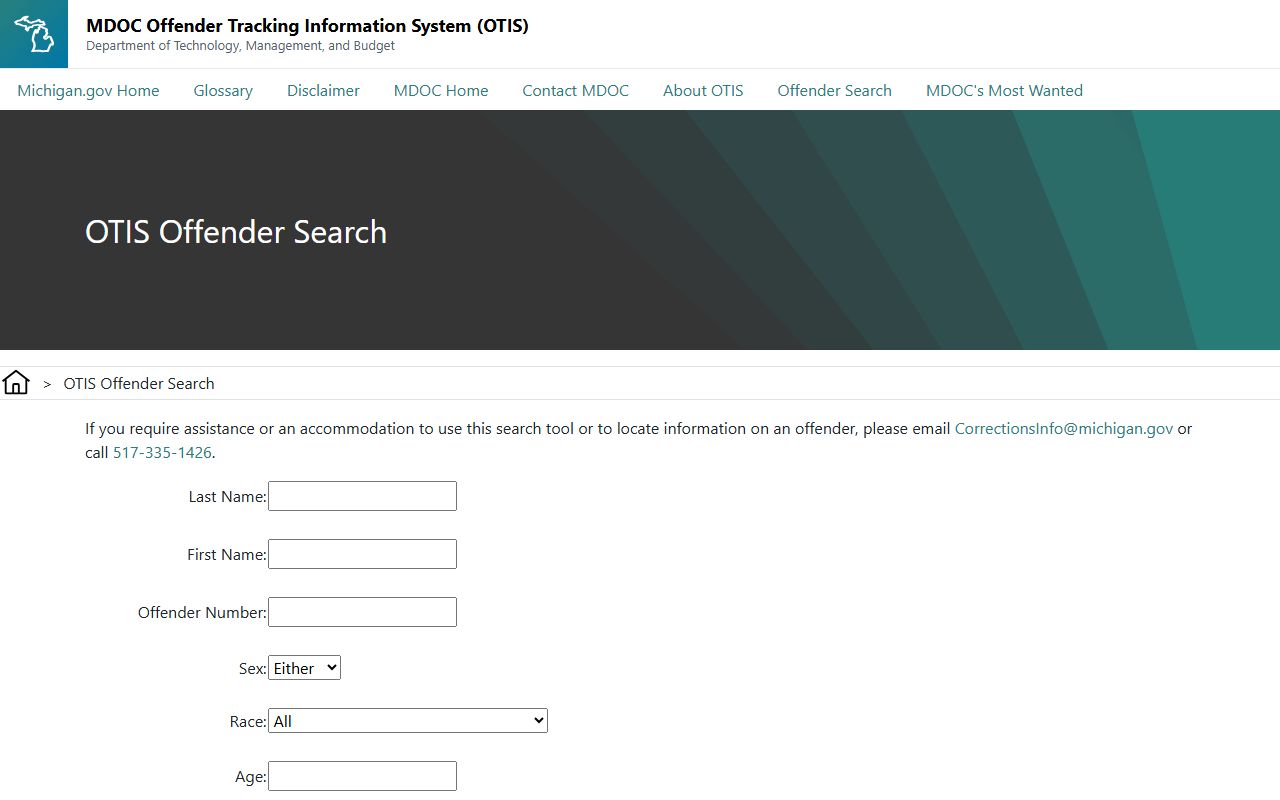
That form is the practical heart of any state-custody lookup tied to the county. It rewards a specific name and a number, and it forgives a rough age. A few careful inputs beat a broad guess almost every time.
When an Alger County Inmate Is Missing
A blank result does not always mean a mistake. Several rules decide who shows up in OTIS and who does not. Understanding them saves a second search and a wasted phone call.
The first reason is timing. Offenders can be removed from OTIS three years after they discharge, unless they re-enter supervision or the conviction is set aside or expunged. So an older case may simply be gone from the public view. A person cleared long ago will often not appear at all.
The second reason is jurisdiction. OTIS tracks state custody, not local jail intake. Someone held only at the Alger County jail, or held in a federal facility, will usually not be listed. The third reason is protection. Juveniles and certain restricted detainees are not publicly searchable, by design. If a name should be in state custody but returns nothing, contact the sentencing court to confirm the record and to correct any error in it.
What an OTIS Offender Profile Shows
A profile page pulls together identity, status, and sentence data for one offender. It reads like a summary sheet rather than a full case file. The table below maps the main fields to what each one tells you.
| Field | What It Shows |
|---|---|
| Offender Number | The unique MDOC number that identifies one person across every record |
| Name and Aliases | The legal name and any other names the person has used |
| Age and Physical Description | Age plus basic details such as height, weight, hair, and eye color |
| Marks, Scars, and Tattoos | Distinguishing body marks used to confirm identity |
| Offender Status | Whether the person is in prison, on parole, on probation, discharged, or absconded |
| Location or Supervising Office | The prison facility or the field office that supervises the person |
| Sentencing Court and County | The court that imposed the sentence, which is where corrections are handled |
| Convictions and Sentence | The offense of record and the sentence terms drawn from court and MDOC data |
These fields are enough to confirm that you have the right person and to see where they stand in the system. They are not a certified record. For anything official, the sentencing court holds the source documents.
Alger County Custody Versus State Prison
The single most useful idea on this topic is the split between county custody and state custody. They are run by different agencies, and they answer different questions. Picking the wrong one is the most common reason a search fails.
County custody means the Alger County jail. It covers people right after arrest, people awaiting trial, and people serving short sentences of up to a year. There is no public online roster for it, so the sheriff's office and jail administrator are the sources. State custody means the Michigan Department of Corrections. It covers prison terms, parole, and probation, and it is fully searchable in OTIS.
The path usually runs one way. A person is arrested and booked into the county jail. If convicted and sentenced to prison or state supervision, their record moves to the state and appears in OTIS. So a fresh arrest points you to the jail phone line, while an older or sentenced case points you to the state system. When a case is still moving through the courts, the Alger County criminal court records track the charges, pleas, and outcome that decide which custody path applies.
Alger County Offender Status Categories
OTIS sorts every offender by a status label. The label is a quick read on where a person stands with the state. Because the county does not publish visitation or custody schedules, this status table is the clearest structured view a searcher gets. The plain-English meanings below match the status choices in the search form.
| Status | What It Means |
|---|---|
| Prison | The person is serving a sentence inside a state prison facility |
| Parole | The person was released from prison and is supervised in the community |
| Probation | The person serves a sentence under supervision instead of prison time |
| Discharged | The sentence is complete and state supervision has ended |
| Absconder | The person left supervision without permission and is being sought |
The form also offers broad filters for Active Offenders and for All, which widen or shift the pool of names you see. A discharged status is why an older county case can still surface for a while, then drop off once the three-year window passes. Reading the status first tells you whether to expect a prison location, a field office, or nothing at all.
Note: The county does not publish visitation hours, mail rules, or commissary policies, so confirm every custody rule directly with the Alger County jail before you rely on it.